By Bobby Neal Winters
Back in February, I began writing about my attempts to make a recorder on my lathe. The journey to do this has taught me a lot and continues to do so. For example, at the time I began I didn’t play the recorder. At all.
The only time I’d ever tried to learn to play any instrument was in my last semester at college. I took a one-hour class in piano because I wanted to learn something about music and I figured that would be my last chance for a while. And I was so right.
I’ve now been learning to play the recorder since mid-May. That’s three and a half months. I am pleased with my progress, but I am a really nice guy, especially to me.
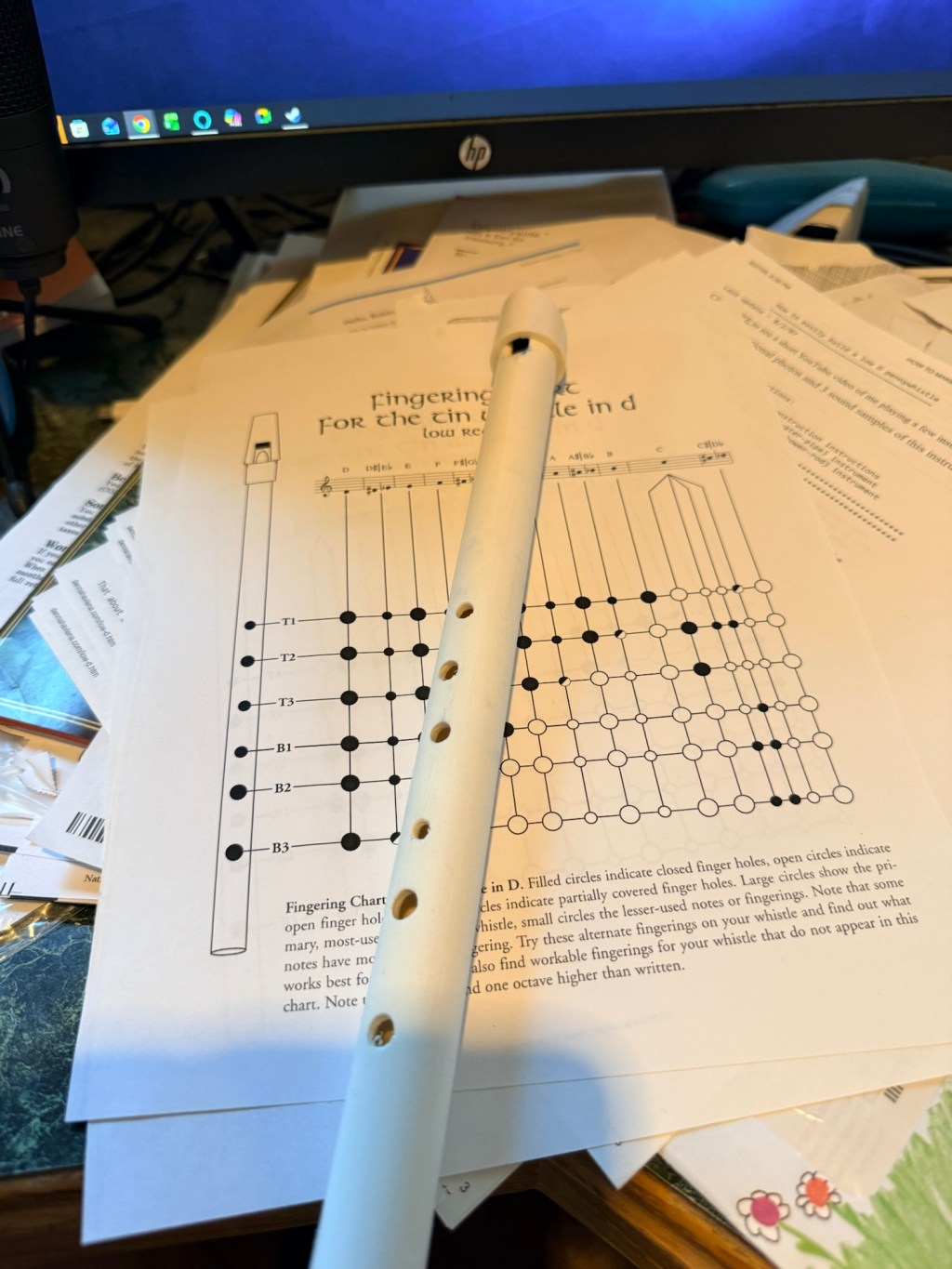
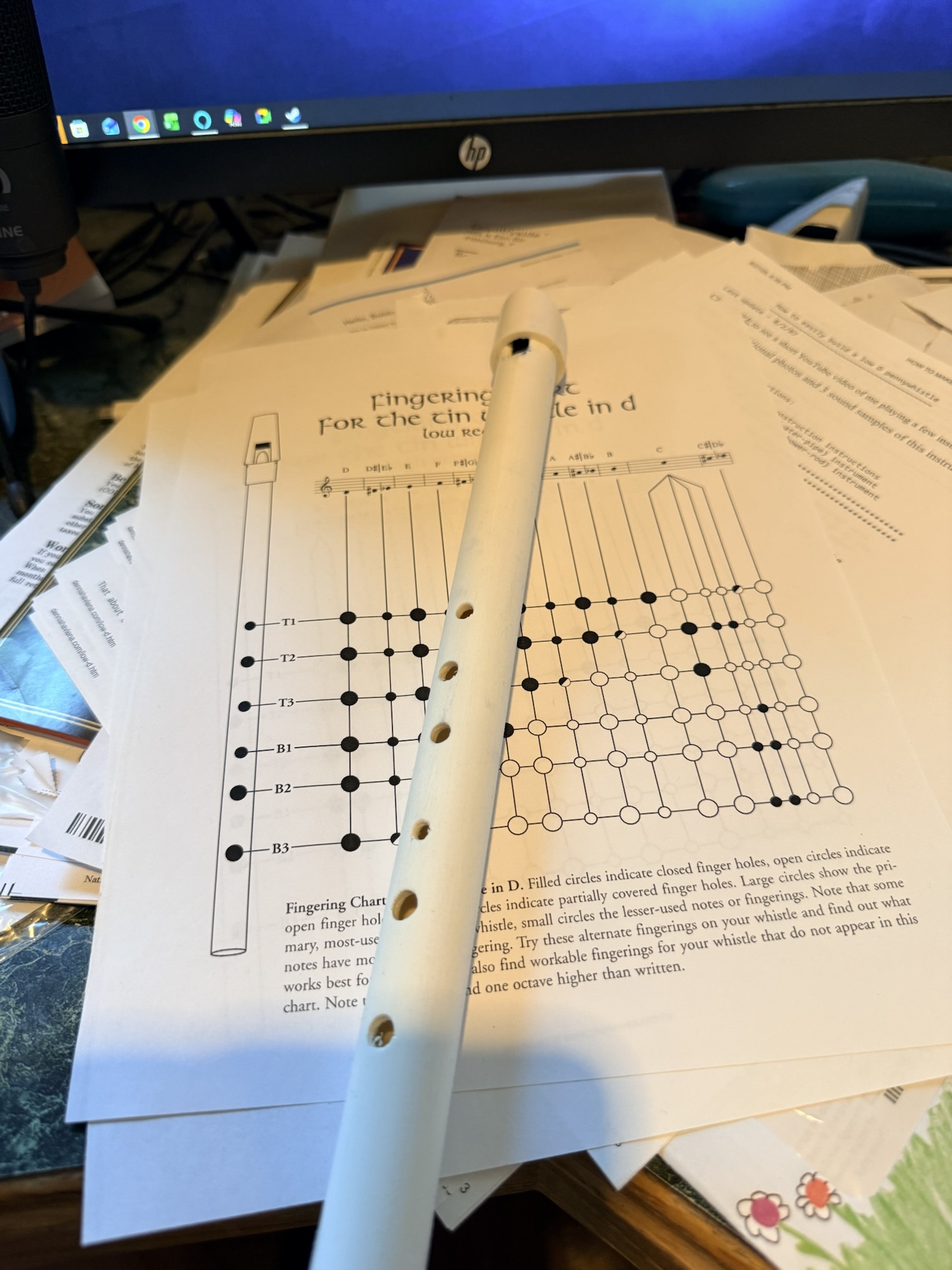
I’m always learning new stuff, but over the last few weeks I’ve learned about a musical instrument I’d been entirely ignorant of: The Tin Whistle.
Part of the problem may be the name. I’d always thought a tin whistle was what referees blow at basketball games. Maybe they are, but there is also a musical instrument called the tin whistle. It is also referred to as the Irish whistle. That may be better because they aren’t all made out of tin. But then they aren’t made from the Irish either.
They are what they are.
At this point, I’ve bought a couple because they are less expensive than recorders. True, if you want to spend a lot of money on one, you darn sure can, but you can get a serviceable Irish whistle that plays two octaves in the key of D for about $15. The downside is, unless you really want to push the envelope, you are pretty much stuck in that one key and have to buy a whole new instrument to play music that is written in a different key.
However, this very day, as I write this, I have made two Irish whistles–one from PVC pipe and one from copper pipe–that sound at least as good as my store-bought whistles. (Look back at the $15 thing before you get too excited. The bar is low.)
Let’s go back to the last paragraph for a minute because I don’t want to waste the impact this has had on me. I’ve been looking for resources for months, literally months to make a recorder. I’ve found some sources that, while promising at first, didn’t really deliver anything operationalizable. That is, nothing, or very little, that I could put to use. I spent money on books, I spent time on internet searches.
Nothing.
Yesterday, on my first search, I found an online source (link here) that was a literal gold mine. It has measurements. It has styles. It has imperial to metric conversion tables. It has diagrams and photographs. It discusses the dimensions of the various features of the Irish whistle, how they can be varied, and what effect that will have on the sound of the resulting instrument.
It’s actually like the author wanted you to be able to make an Irish Whistle.
And it may be that all the sources I’ve found on the recorder want you to just give up and buy one.
I have bought recorders, but I’ve not given up.
Indeed, this online resource has given me new hope. While these are different instruments, physics is physics. Anything that I learn while making Irish Whistles, might apply to the construction of recorders.
In the meantime, in addition to bringing me content on woodworking and the recorder, my Youtube algorithm is now bringing me content from people who have beautiful Irish accents and are enthusiastic about what they call the “tin whistle.”
While I’ve not practiced with the Irish Whistle as much or as long as I have the recorder (a couple of weeks versus three-and-a-half months), I can actually play tunes on it, some of which I can even recognize.
Life is good.
Bobby Winters grew up near Harden City, Oklahoma. He teaches mathematics and computer science, does woodworking, and blogs at okieinexile.com. He invites you to visit the blog and to subscribe.


Leave a Reply