By Bobby Neal Winters
There are a lot of love songs. Pick a song from the Top 40, ask what it’s about, and without looking at the title you can answer “Love” and usually be right.
Most of them aren’t much good.
Really.
There are some–very, very few–which can pass the test of having a quality of eternity about them.
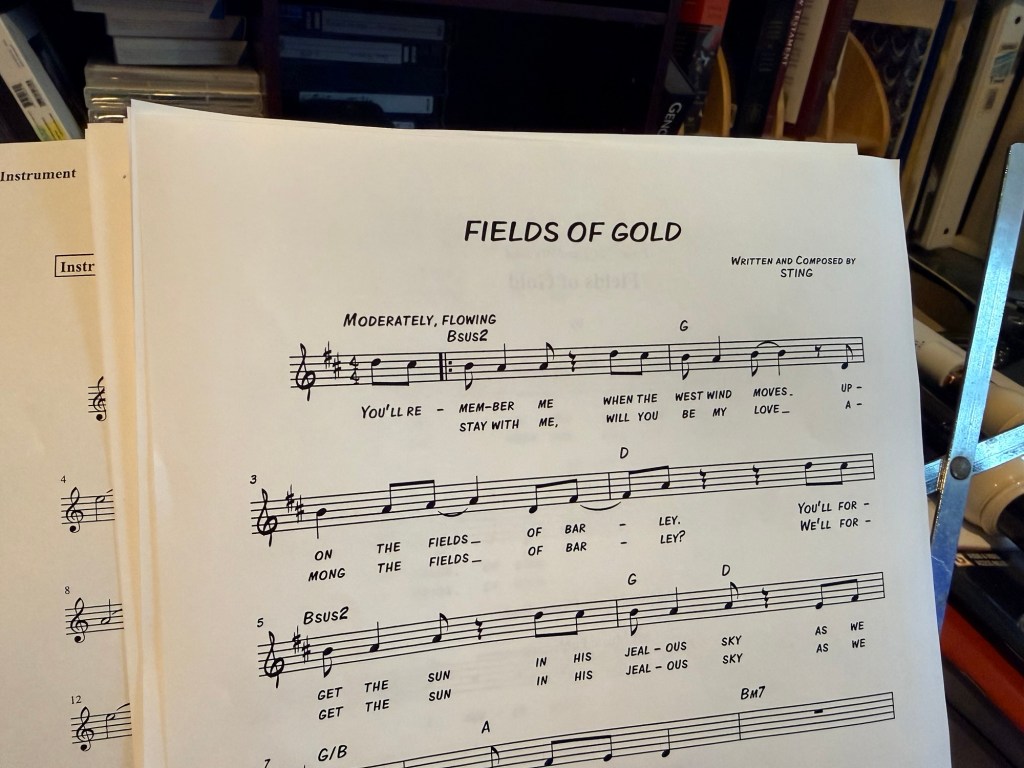
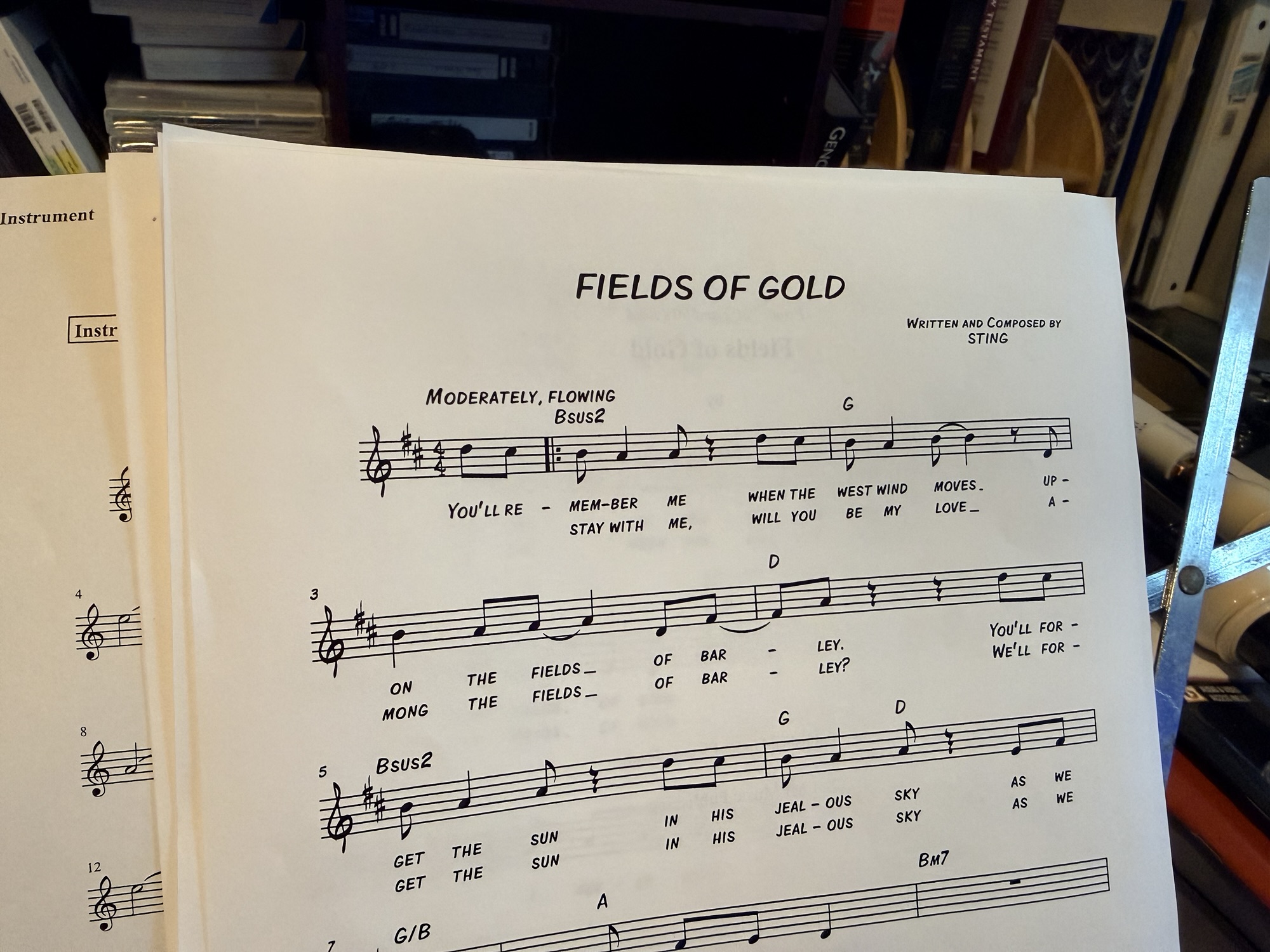
“Fields of Gold” by Sting is such a song.
Take this song back with you in a time machine, translate it into the appropriate language, sing it to King David or Socrates or Lao Tzu, and they would understand it.
Will you stay with me? Will you be my love?
Among the fields of barley
We’ll forget the sun in his jealous sky
As we lie in fields of gold
We are in an age where we talk about equality. We prize it. We dangle it as a prize. But the most important human relationship, that which exists between a woman and a man–a mother and a father–is inherently asymmetrical.
When a young, healthy woman and a young, healthy man come together, there is always a chance that a child will result from this. The child exists within the nurturing body of the mother, but the father has no physical connection. His boots were literally made for walking.
Supporting a family is a lot of work. Why should he stay?
There are a lot of answers to this. It’s the right thing to do. It’s the fair thing to do.
Yet he has the freedom to do the wrong thing, the freedom to be unfair. Those freedoms are exercised all too often.
The woman, for her part, has her love to offer. This is a gift so valuable that many a man, many a good man, has exchanged the entire world outside the circle that contains her for it.
That’s the ideal. It’s beautiful when it works.
When it doesn’t work, Hell can come and be upon Earth. This is the image we are given by Meatloaf’s song, “Paradise by the Dashboard Light.”
While this song is about the same asymmetry in the male/female relationship, it does not have the same eternal quality as does “Fields of Gold.” While the ancients I mentioned could be made to understand it, they would have to be told about cars, radios, and the sexual symbolism of baseball.
“Paradise by the Dashboard Light” does do a good job, however, of portraying how the twisted ideal can leave those involved in the relationship “praying for the end of time.”
By way of contrast, “Fields of Gold” present humans in an idealized natural state. I don’t mean “idealized” in the sense of unobtainable, but as something to be strived for. A woman and a man, living a natural life, having and raising children, building a life together. When, as is inevitable, one of them dies, one of them having memories of that shared life.
We have this ideal because it is worth reaching for. I will leave it to each of you to answer whether anyone ever achieves it exactly, but I will defend to my last red corpuscle that a lot of people come gratifyingly close.
You’ll remember me when the west wind moves
Upon the fields of barley
You can tell the sun in his jealous sky
When we walked in fields of gold
Bobby Winters grew up near Harden City, Oklahoma. He teaches mathematics and computer science, does woodworking, and blogs at okieinexile.com. He invites you to visit the blog and to subscribe.
 Okieinexile's Blog
Leave a comment