By Bobby Neal Winters
When we are born, we know nothing. We can’t feed ourselves. We can’t do anything but “make messes,” and we can’t clean those messes up ourselves. If we are lucky, we have someone who will clean those first messes up for us.
Those people who cleaned us up and fed us might’ve known something, but they might not’ve known much more than we did. Here I need to be plain: They might not’ve known much more that we did about what actually matters, about life. Or to paraphrase Will Rogers, they might’ve known a lot that just ain’t so.
Anyway, we were squirted out into life and left in the care of amateurs. If we were lucky, they were well-meaning amateurs.
What we start doing when we feel the doctor’s spat on our backsides, when we draw that first breath, when we emit our first cry, when we are comforted at the warmth of our mother’s breast is creating a model of the world in our tiny little brains.
We slowly start putting together a picture of what the world is actually like. A great metaphor for this is Sid Meier’s game “Civilization,” wherein the squares on the computer screen light up when you visit and investigate them. As you explore, you create a map of the world.
Let me post a warning here in the form of a phrase I’ve heard a friend of mine utter: “The map is not the territory.” (It’s originally from Alfred Korzybski.) Reality is often more nuanced than our perception of it.
Yet for so much all we have is a map and not only a map, but a map that someone else has made.
The first map we get is the one we receive from our parents. The transmission of this map is often problematic. One scene that illustrates this is etched so vividly on my brain I don’t think I will ever forget it. My dad was doing a repair on the car and was trying to teach my brother and me about it. He said, “You need to pay attention because I won’t always be here.”
Our response was, “Oh, Dad.”
While I didn’t learn what he was trying to teach about auto repair, I did learn that children don’t always listen to their parents when they ought to. That part of the map is pretty accurate.
Well, if we don’t necessarily learn that much from our parents, where do we learn it?
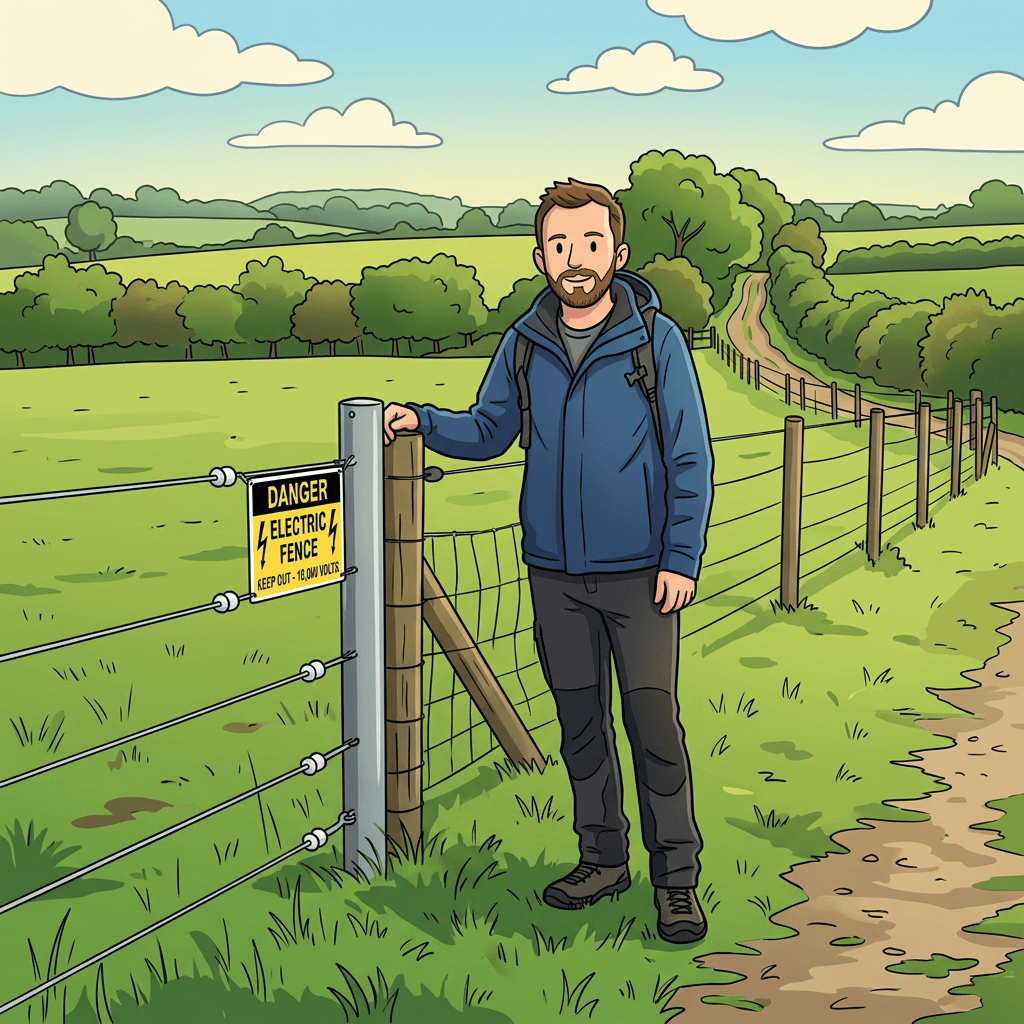
There are two ways: The easy way and the hard way. To paraphrase Will Rogers again, you either read the sign that says “Electric Fence” or you urinate on the electric fence.
I’ve done my share of the latter.
To unpack this a little bit, we can either learn from the experience of others or we can learn for ourselves.
The obvious lesson from this is to learn as much as you can from others by reading, listening, and studying. The problem is sometimes these other people we are learning from are wrong. Sometimes someone has just put up the “Electric Fence” sign as a joke. Or maybe it’s been disconnected from the power. At such times, if you want your map to be correct, you test in some judicious way whether or not the fence has been electrified.
Urinating on it is probably not the best way.
There are ways we do pass our maps of the world from generation to generation. One of these methods is a “practice.” Here the word “practice” refers to something like the practice of woodworking or the practice of music. There are humans who are engaged in doing something. They do it and they teach it to the next generation that carries the practice on. They use books (and YouTube videos and webpages), but the practice itself lives among the people who engage in the practice. This is true for mathematics, for woodworking, for music, and for Life.
The practice of Life is what I am talking about here. To learn about mathematics, I went to school. To learn about woodworking and music, I’ve gone to YouTube. Where do you go to learn about Life?
Well, you can try to figure it all out for yourself. Be warned, there are a lot of electric fences out there to be peed on.
If that doesn’t appeal to you, you need to surround yourself with as good people as who can stand to be around you. I say good instead of smart. They can be smart, but they must be good.
Then you watch those people and listen to those people and you see what they do.
The overwhelmingly vast majority of the people I spend my time with go to a church of one type or another. Their churches provide a map for them that goes back as far as anyone remembers. Some of these churches have marked the electric fences and will show you detailed ways to deal with them safely, no peeing required.
Bobby Winters grew up near Harden City, Oklahoma. He teaches mathematics and computer science, does woodworking, and blogs at okieinexile.com. He invites you to visit the blog and to subscribe.


Leave a Reply