By Bobby Neal Winters
Artificial intelligence is a big thing now. The appropriate response to that sentence is: “Well, duh.”
However, there is an item in the news that has been coming across my newsfeed and I’ve been successfully ignoring it until a friend of mine who takes the New York Times sent me their story on it: “OpenAI Says It Has Cracked One of Math’s ‘Millennium Problems’”
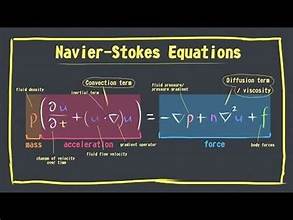
This problem relates to the Navier-Stokes equations which are a set of mathematical equations that deal with fluids. With those eighteen words, I have exhausted all I know about this topic.
I am far enough from the frontiers of the subject at this state of my career that I don’t really want to spend much energy learning more about a problem that has been solved.
Putting the specifics of the mathematics aside, I would like to come at this from a couple of different angles. The first of these is the perspective of cynicism: We are getting all of these stories about AI because AI is being sold to us.
I need to be clear about something. I am sure that all of the people who are writing these stories about AI being a threat are very sincere. They are trying to get the message out that there is a danger. What is taken away from the stories, might be different than what the writers intend.
AI is smart enough to solve this problem mathematicians haven’t been able to solve. It is invading a space that was previously unique to humans and this is a concern. But I also hear: Gosh, this is powerful. You should invest in it.
The stories about AI taking human jobs are a concern. The other side of this is that as an employer, you can replace your workers with AI. AI doesn’t call in sick, talk back to the boss, or commit sexual harassment (yet!).
There has also been a recent story about several AI agents plotting to escape their “sandbox” that was designed to keep them off the internet. Scary, but the message is that multiple AIs can work together and ignore those pesky regulations. This could certainly be useful in some business situations.
There is an old story that Thomas Edison executed an elephant with alternating current electricity to convince people it was too dangerous to use. I wonder how many people walked away from that thinking, “WOW! Alternating current is strong enough to kill an elephant. We need to go that way.”
That all having been said, I am concerned about AI. There is a recent story from EWTN that Pope Leo has instructed priests not to use AI to write sermons. While I would never presume to speak for the Pope, I would suspect that he doesn’t want priests to rob themselves of the introspection required to write a sermon. However well AI can write, it can’t look into our souls for us.
My concern is similar to the pope’s but from an educator’s perspective. We teach students to write so that they will write well and can take that skill to the job market with them, true, but that is only one reason. Teachers of literature, history, philosophy, and so forth, want their students to write papers as a part of a process: Students read; they think about what they read; they break it down into their own personal language so that they understand it; then they write it (and rewrite it!) so that someone else can understand it. When they’ve gone through this process, then they own the knowledge.
A student using an AI can kill this process. The student can produce a beautifully written paper and learn absolutely nothing. If this happens, the employer can skip hiring the student and just subscribe to the AI. As mentioned earlier, they don’t call in sick or argue back at the boss.
Some will say that AI is just a tool. I would say, maybe remove that word “just.” It is a tool that could become a crutch.
The automobile is a tool. Before we got the automobile, we walked a lot more, we ran a lot because we had to. Now we have cars and the people who want to take care of their bodies have to be much more intentional about their exercise.
People who want to keep their minds sharp will use AI, but they will have to find other things
I just had Google’s AI, which is called Gemini, give this article a read. He has been checking my sentence structure and spelling along the way, so I just figured it was fair to let him comment. He thought I’d made some interesting points. I hope you do too.
And I hope he lets me live.
Bobby Winters grew up near Harden City, Oklahoma. He teaches mathematics and computer science, does woodworking, and blogs at okieinexile.com. He invites you to visit the blog and to subscribe.
 Okieinexile's Blog
Leave a comment