By Bobby Neal Winters
As I re-read scripture, I find there are interpretations that are available the second or third time around that weren’t there the first time around. By the very nature of that, these are not things that I can explain in a short span of words or a short span of time. These are interpretations I’ve had to grow into.
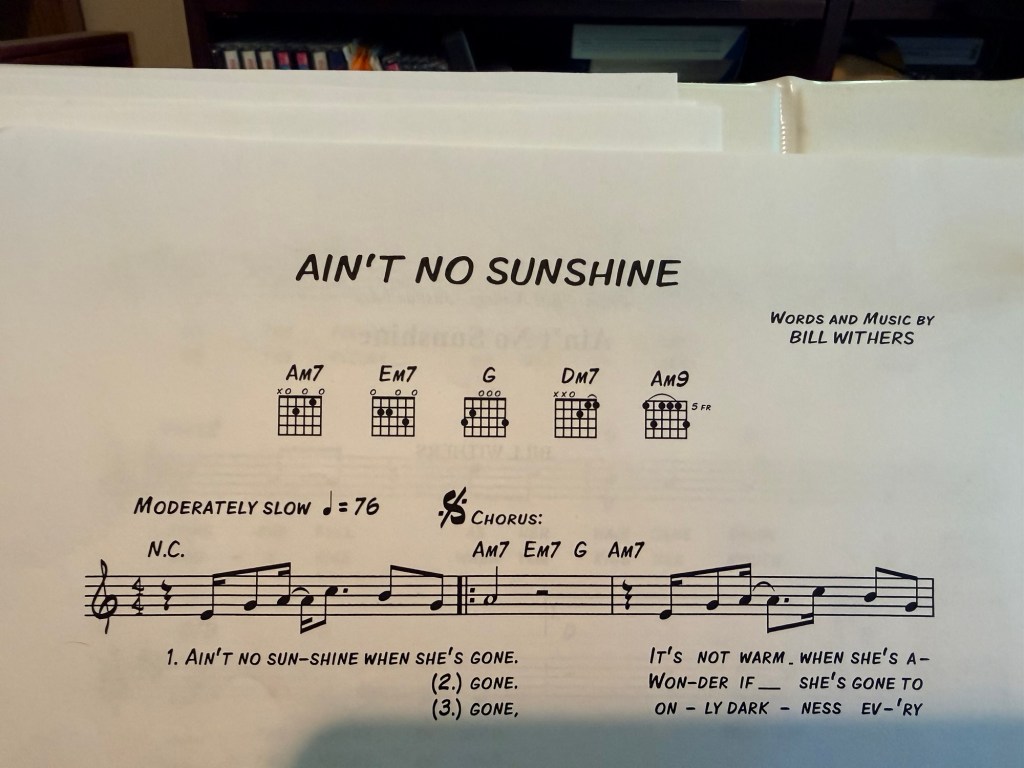
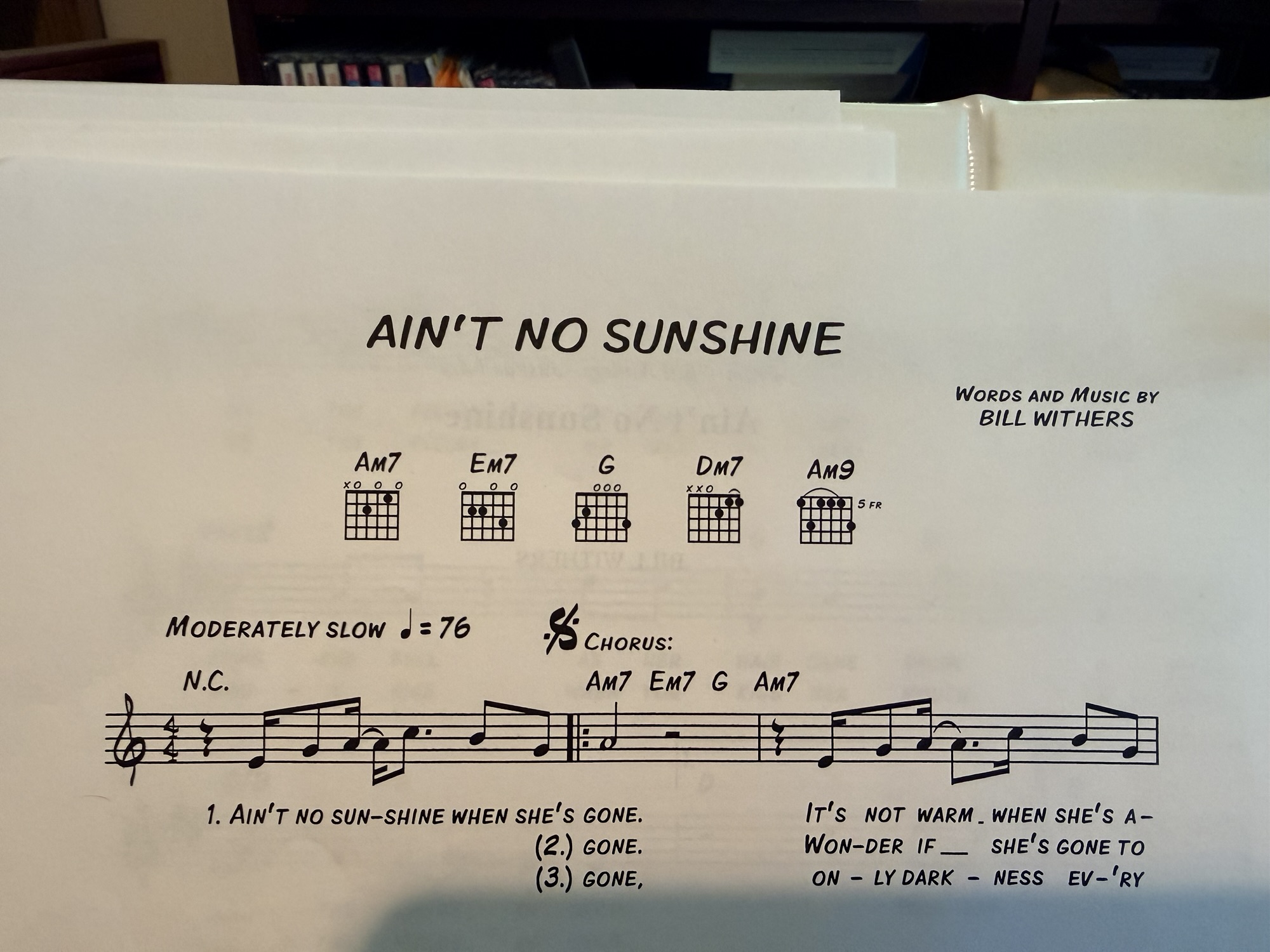
But to give an example from the outside of scripture, let me talk to you about a song that I’ve been learning on the Penny Whistle that packs an incredible amount of meaning into a few words.
When I first heard Bill Wither’s song “Ain’t No Sunshine” (written in 1971), to me it was just a song about a man loving a woman and wanting her to come back. He missed her; he was sad about it; he wanted her to come back.
If you’ve only paid attention to the first verse and the refrain, “There ain’t no sunshine when she’s gone,” that’s what you take away with you. This is especially true when you are young and have lived your life in a traditional, nuclear family, more or less packed in cotton wool.
But there is a lot more there.
Life reveals things to you. Things you might rather not know. People and the mistakes they make are better than a university for a certain type of education.
Listening to the rest of the song, we know that he is older than the woman he’s singing about. Perhaps a good deal older.
He’s seen a good bit of the world. He knows what the world is about and he knows about people. The woman he loves periodically disappears to a place he knows not where.
He knows not where, specifically, but he’s got a pretty good idea in general. She’s younger than he is. She needs something that she can’t receive from him and she goes to a place where she can get it.
She might not realize that he knows. She probably doesn’t. She may think she’s pulling the wool over his eyes. Youth doesn’t value experience as much as it ought because it doesn’t have any.
In many ways, “There Ain’t No Sunshine” is the Eagle’s Song “Lyin’ Eyes” from the other point of view. Our older man is telling the story, so he gets our sympathy.
But our sympathy needs to be tempered with the knowledge that, in the words of that well-worn phrase: He ought to know better.
The thing is, he does know better. The song tells us so. In the song’s bridge, he tells us 26 times “I know”:
Hey, I ought to leave the young thing alone,
But there ain’t no sunshine when she’s gone.
He’s a man with some miles on him, a good number of them “City Miles.” He knows–at least in the abstract–everything she’s doing. But she’s got a hold on him. The way that sentence is phrased might make her look like the villain, and it is possible that she is, but it’s far from a sure thing.
Women don’t have to do a thing for men to become obsessed with them. (Let me mention Sting’s “I’ll be Watching You” at this point, another song which the years have illuminated nicely.)
The point is that from the perspective of the singer, she is the one with the emotional power in the relationship. He knows it; he’s got a pretty good idea that this is not going to turn out in a positive way; but he can’t find a way out that he’s got the emotional strength to take.
It is very easy to moralize here. We say, “He ought to know better.”
Because, you know he ought to.
We say, “She’s using him.”
Because, hey she’s using him.
It’s an easy armchair psychological diagnosis to say he’s transferring romantic feelings to someone he should be treating like a daughter.
It’s easy to say that she hasn’t fully developed a sense of empathy to recognize this older man as a human being with feelings that she can hurt and is hurting.
But it’s a complicated world. We can only sympathize with the man’s pain.
And we can thank the song writer for suffering so we don’t have to.
Bobby Winters grew up near Harden City, Oklahoma. He teaches mathematics and computer science, does woodworking, and blogs at okieinexile.com. He invites you to visit the blog and to subscribe.


Leave a comment